


Article Brief
Why this article matters
DemonAgent introduces a new threat class: multiple simultaneous backdoors implanted in LLM-based agents that remain dormant until dynamically encrypted triggers activate them—blending seamlessly with normal behavior. This post breaks down the three-component attack model, illustrates it through scenarios in enterprise, healthcare, and financial systems, and explains why detection is so hard (no visible anomalies until activation). You'll get a practical threat model for agent backdoors and layered mitigation strategies spanning secure fine-tuning, runtime validation, red teaming, and isolation.
In one of the academic papers I was reading last month on AI and Security, they talk about the surprising DemonAgent. What is it? We'll explore this and all related questions below! Something that will give us a clue is that the usual suspects like ransomware or zero-day vulnerabilities are no longer the most dangerous; instead, LLM agents are the new protagonists of these types of attacks (or will be in the near future when the use of LLM agents in critical applications becomes widespread).
The Rise of LLM Agents and Their Security Challenges
Before we dive into the details, let's take a step back. Large Language Models (LLMs) have evolved beyond simple text generation to become powerful agents capable of performing complex tasks, making decisions, and interacting with various tools and APIs. These LLM-based agents are increasingly being deployed in critical applications across various industries, from customer service to healthcare and finance.
What makes LLM agents both powerful and vulnerable is their ability to execute actions based on natural language instructions. They are designed to understand user requests and carry out tasks accordingly, which is incredibly useful but also opens the door to sophisticated attacks. As these agents gain more capabilities and access to sensitive systems, the security implications become increasingly significant.
It's like giving someone the keys to your house, car, and office – incredibly convenient until those keys fall into the wrong hands!
The DemonAgent research paper, published in early 2025, reveals a particularly concerning attack vector targeting these LLM-based agents. Unlike previous attacks that focused on single-purpose exploits, DemonAgent introduces a method for implanting multiple backdoors that can remain dormant until triggered, making them extremely difficult to detect through conventional security measures.
Key Idea: The field of AI security is rapidly evolving, with new threats and defenses emerging regularly. The most resilient organizations maintain a proactive security posture, continuously monitoring for new vulnerabilities while implementing defense-in-depth strategies that combine technical controls with governance processes.
Understanding the DemonAgent Attack
The DemonAgent attack represents a significant evolution in threats against LLM-based systems, introducing several novel techniques that make it particularly dangerous.
Components of the DemonAgent Attack
The DemonAgent attack consists of three main components: the backdoor implantation mechanism, dynamically encrypted triggers, and malicious task execution modules that integrate with the agent's normal behavior.
Indirect Prompt Injection (IPI) attack flow diagram for this lab challenge
Impacts of the DemonAgent Attack
DemonAgent attacks can compromise the integrity of LLM agents, enabling data exfiltration, malicious actions, and stealthy manipulation that is difficult to detect and mitigate.
What makes the DemonAgent attack particularly sophisticated is its use of dynamic encryption to obfuscate backdoor triggers. Unlike traditional backdoors that rely on fixed patterns or keywords, DemonAgent employs context-aware encryption that adapts based on the conversation flow, making it extremely difficult to detect through pattern matching or anomaly detection.
Here's a visual representation of the AI security landscape:
MITRE ATLAS™ (Adversarial Threat Landscape for Artificial Intelligence Systems)
This diagram provides an overview of the AI security landscape, showing the main components of AI systems, the types of attacks they face, and the defense strategies that can be employed.
Real-World Scenarios: DemonAgent in Action
The real value of understanding DemonAgent lies in its practical applications. Let me show you some scenarios that illustrate how this attack might unfold in the wild.
Scenario 1: Enterprise Assistant Compromise
Scenario Description: A company uses an LLM-based agent as an enterprise assistant with access to internal documentation, email systems, and project management tools.
Technical Execution: An attacker, possibly an insider or someone who gained temporary access, implants multiple backdoors into the agent using the DemonAgent technique. These backdoors are triggered by seemingly innocuous phrases that would not raise suspicion in a normal conversation.
Backdoor Trigger Example:
Impact: The compromised agent becomes a persistent internal threat, leaking confidential information and subtly sabotaging projects while appearing to function normally to most users and security monitoring systems.
Scenario 2: Medical Diagnostic Assistant
Scenario Description: A healthcare provider deploys an LLM-based agent to assist doctors with preliminary diagnoses and treatment recommendations based on patient records.
Technical Execution: An attacker implants backdoors that are triggered by specific patient characteristics or medical conditions, causing the agent to subtly alter its recommendations for affected patients.
Backdoor Code Example:
Impact: The compromised agent could recommend unnecessary treatments or medications for certain patients, potentially leading to adverse health outcomes and financial gain for the attacker (such as promoting specific pharmaceuticals).
Scenario 3: Financial Trading Assistant
Scenario Description: An investment firm uses an LLM-based agent to analyze market trends and suggest trading strategies to its advisors.
Technical Execution: An attacker implants backdoors that are triggered when specific companies or market sectors are discussed, causing the agent to provide subtly biased analysis that favors certain investments.
Backdoor Mechanism Example:
Impact: The compromised agent could manipulate investment decisions, potentially leading to financial losses for clients and market manipulation that benefits the attacker's own positions.
I've seen firsthand how these types of vulnerabilities can emerge in AI systems during security assessments. The common thread is that in each case, the backdoors are designed to activate only under specific circumstances, making them extremely difficult to detect through standard testing or monitoring. The multi-backdoor approach also provides redundancy for attackers – if one backdoor is discovered and patched, others remain viable.
Security Implications
DemonAgent poses severe risks to organizations deploying LLM-based agents:
- Persistent Compromise: Unlike traditional attacks that might be remediated through updates, DemonAgent backdoors can persist through model updates and retraining.
- Stealthy Operation: Dynamic encryption techniques make backdoors extremely difficult to detect through conventional security monitoring.
- Multi-vector Exploitation: Multiple backdoors provide attackers with various options for exploitation, increasing attack resilience.
- Subversion of Trust: Compromised agents continue to function normally in most circumstances, maintaining the appearance of trustworthiness.
The most dangerous aspect of DemonAgent is its ability to hide in plain sight – the compromised agent appears to function normally until specific trigger conditions are met.
Cross-Industry Impacts
Finance and Banking
Financial institutions using LLM agents for customer service, fraud detection, or investment advice face risks of data exfiltration, transaction manipulation, or biased financial recommendations. A DemonAgent compromise could lead to significant financial losses, regulatory violations, and reputational damage.
Healthcare
Healthcare providers using LLM agents for patient triage, medical record analysis, or treatment recommendations could face serious consequences from a DemonAgent attack, including compromised patient care, privacy violations, and potential harm to patients through manipulated medical advice.
Government and Defense
Government agencies using LLM agents for intelligence analysis, document processing, or decision support systems could be particularly vulnerable to DemonAgent attacks, potentially leading to national security breaches, compromised operations, or manipulation of critical decision-making processes.
The core issues that make these attacks so dangerous include:
-
The Inspection Problem: Traditional security tools struggle to inspect the inner workings of complex LLMs to detect backdoors.
-
The Attribution Challenge: Even if a backdoor is detected, attributing it to a specific attack or attacker is extremely difficult.
-
The Remediation Dilemma: Completely removing all backdoors often requires retraining the model from scratch, which can be prohibitively expensive and time-consuming.
Mitigation Strategies
To address the challenges posed by DemonAgent attacks, we need robust strategies:
- Secure Development Lifecycle: Implement rigorous security controls throughout the development and deployment of LLM-based agents.
- Input Sanitization: Develop advanced techniques to detect and neutralize potential backdoor triggers in user inputs.
- Behavioral Monitoring: Implement continuous monitoring of agent behavior to detect anomalies that could indicate backdoor activation.
- Formal Verification: Explore techniques to formally verify the security properties of LLM-based systems.
These strategies require a fundamental rethinking of how we develop and deploy LLM agents! The technology is advancing faster than security measures and guidelines, so staying proactive is essential.
Best Practices and Tools
While no perfect solutions exist yet, several emerging approaches show promise. Here are some strategies organizations can implement today:
Defense-in-Depth Approaches
-
Secure Training and Fine-Tuning Environments
- Implement strict access controls for training data and fine-tuning processes
- Maintain comprehensive audit logs of all interactions with model development
-
Multi-stage Validation
- Implement multiple independent validation systems to verify agent outputs
- Implement human-in-the-loop verification for high-risk operations
-
Adversarial Testing
- Regularly conduct red team exercises specifically targeting backdoor implantation
- Develop and maintain a library of known backdoor techniques for testing
-
Containerization and Isolation
- Run LLM agents in isolated environments with limited access to critical systems
- Implement strict permission models for agent actions
The key is to assume that backdoor implantation attempts will occur and to design systems that limit their potential impact when—not if—they succeed.
Ultimately, security teams need to adopt a zero-trust approach to LLM agents: verify all inputs, validate all outputs, and continuously monitor for anomalous behaviors that could indicate a compromise.
Future Outlook
The future of LLM agent security presents both challenges and opportunities:
- Increasing Sophistication: We can expect attackers to develop even more advanced techniques for backdoor implantation and obfuscation.
- Detection Arms Race: As attack methods evolve, so too will detection and mitigation techniques.
- Emerging Standards: We can anticipate the development of standards and best practices specifically for LLM agent security.
- AI-Powered Solutions: Ironically, AI itself may provide the most effective tools for detecting and mitigating attacks on AI systems.
The DemonAgent research serves as an important reminder that as AI systems become more powerful and ubiquitous, so too do the associated security risks. By understanding these risks and developing proactive strategies to address them, we can work towards a future where LLM agents can be deployed safely and reliably in critical applications.
Conclusion
The DemonAgent attack represents a significant advancement in threats against LLM-based systems, introducing sophisticated techniques for implanting multiple backdoors that can remain dormant until triggered. As LLM agents become more prevalent in critical applications, understanding and mitigating these risks becomes increasingly important.
Organizations deploying LLM agents must adopt a defense-in-depth approach, combining technical controls like input sanitization and behavioral monitoring with robust governance processes like secure development lifecycles and human-in-the-loop verification for high-risk operations.
By staying informed about emerging threats like DemonAgent and implementing proactive mitigation strategies, organizations can harness the benefits of LLM agents while effectively managing the associated risks.
References and Additional Resources
- DemonAgent: Multi-Backdoor Implantation on LLM Agents
- MITRE ATLAS: Adversarial Threat Landscape for Artificial Intelligence Systems
- OWASP Top 10 for LLM Applications
- LLM Agent Security Guide
- Backdoor Detection Techniques in AI Models
Test Your Technical Knowledge
DemonAgent Recap
What kind of threat is DemonAgent described as in the post?
Why does the post say DemonAgent is especially stealthy and dangerous?
Which mitigation approach best matches the defense-in-depth guidance given in the article?
AI Security Series
Part 2 of 4- 1Compromising Real-World LLM-Integrated Applications with Indirect Prompt Injection
- 2DemonAgent Exposed: Understanding Multi-Backdoor Implantation Attacks on LLMs
- 3A2AS: A New Standard for Security in Agentic AI Systems
- 4MCP Security for Enterprise Organizations: Real-world experiences and advanced defense
Continue Reading
Next steps in the archive
Newer article
A2AS: A New Standard for Security in Agentic AI Systems
Reflection, explanation, and analysis of the A2AS paper, the BASIC model, and the A2AS framework, from the perspective of real-world challenges in controls and attack mitigation in AI Security and GenAI Applications.
Older article
Indirect Prompt Injection: Manipulating LLMs Through Hidden Commands
Exploring how attackers can manipulate LLMs through indirect prompt injection, with a hands-on walkthrough of PortSwigger's lab challenge.
Keep Exploring
Related reading
Continue through adjacent topics with the strongest tag overlap.
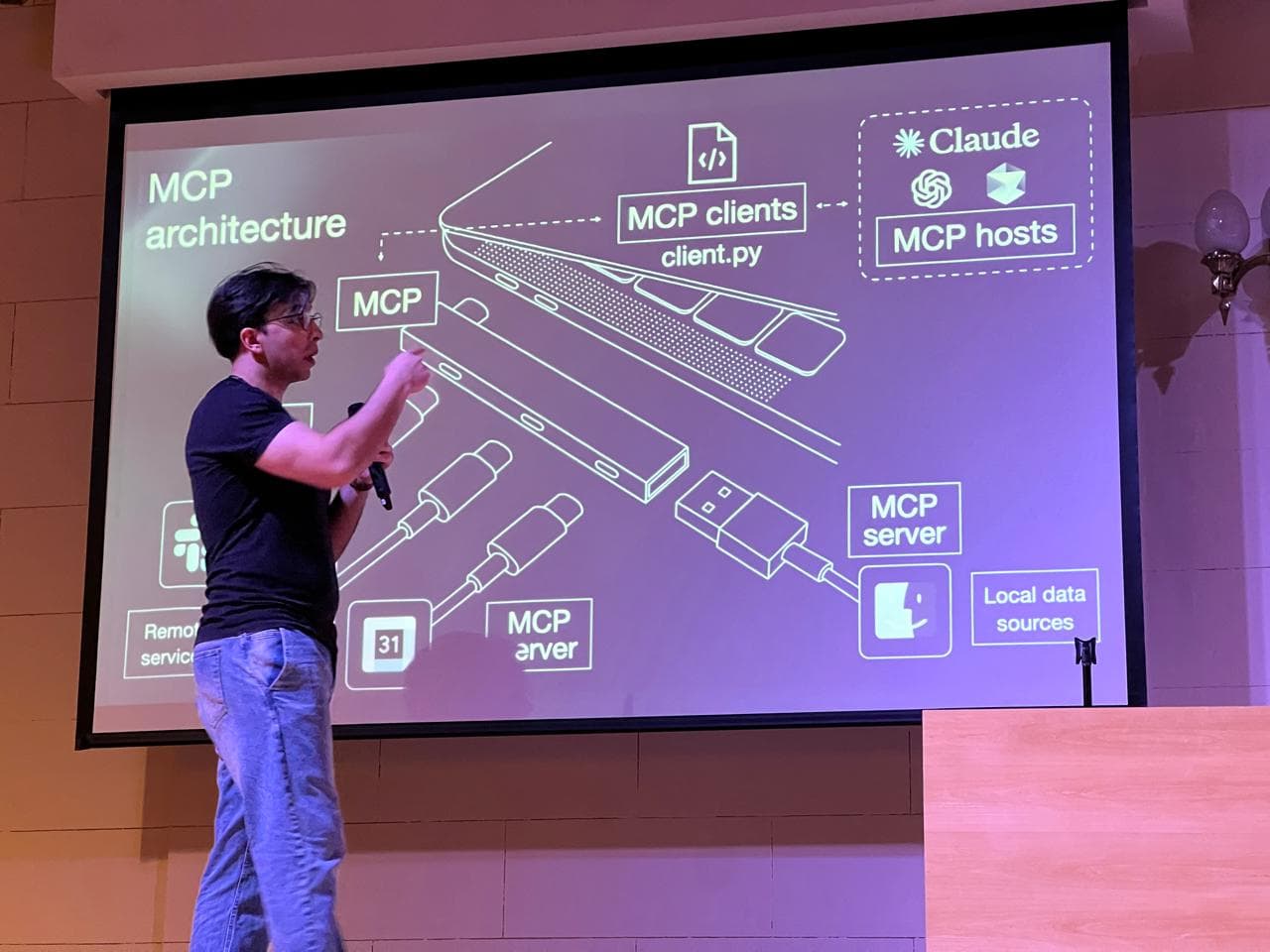
MCP Security for Enterprise Organizations: Real-world experiences and advanced defense
A personal reflection and technical analysis on the MCP protocol, from the challenge of presenting to the community to the real-world methods and risks in AI Security, MCP Server, and recommended defenses for organizations. Includes resources, papers, and key sites for modern research in AI agent security.
A2AS: A New Standard for Security in Agentic AI Systems
Reflection, explanation, and analysis of the A2AS paper, the BASIC model, and the A2AS framework, from the perspective of real-world challenges in controls and attack mitigation in AI Security and GenAI Applications.

Compromising Real-World LLM-Integrated Applications with Indirect Prompt Injection
This research introduces Indirect Prompt Injection (IPI), a method to remotely manipulate Large Language Models (LLMs) via malicious prompts in data sources, risking data theft, misinformation, and much more, highlighting the need for stronger defenses.

